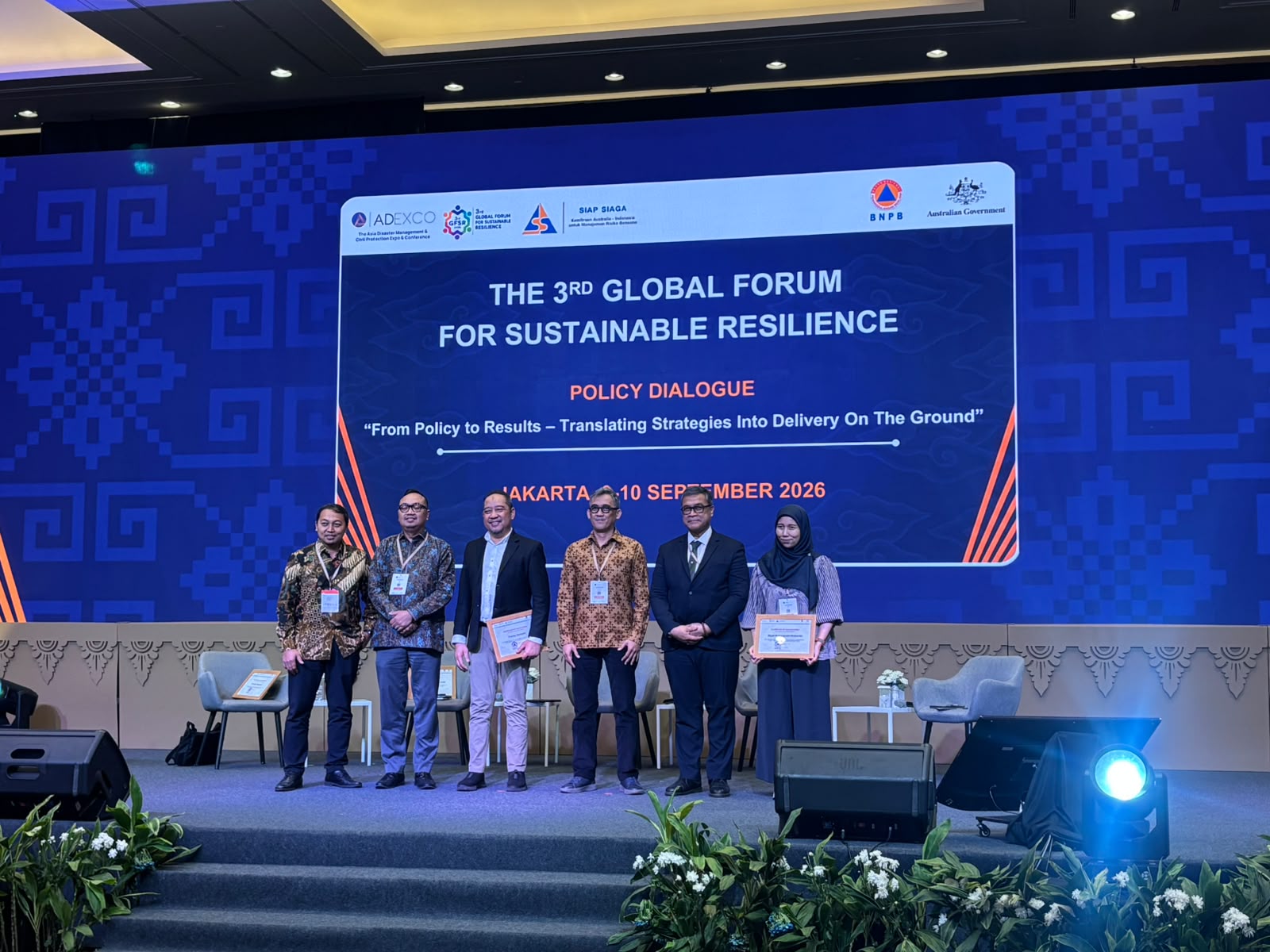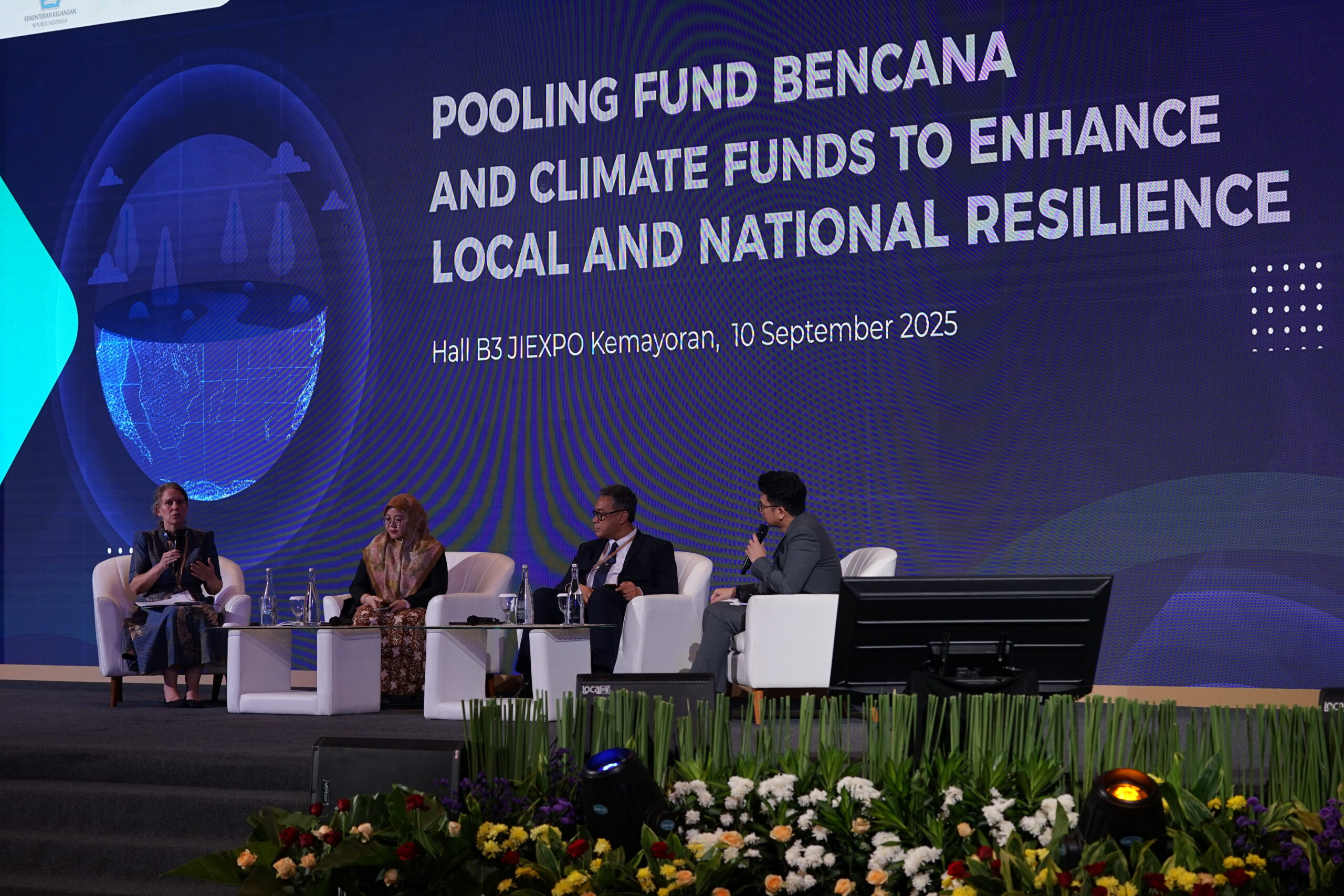

BALI – The 16th Integrated Disaster Risk Management (IDRiM) Conference featured an IDRiM Special Session titled “Social Finance for Disaster Risk Reduction: Feasibility, Design, and Implementation” on Wednesday, September 9, 2026. The session explored opportunities to leverage social finance innovations as an alternative source of funding to support disaster risk reduction, post-disaster recovery, and community resilience.
Nopriyanto Hady Suhanda, a Policy Analyst at the Directorate General of Economic and Fiscal Strategy (DJSEF), Ministry of Finance, participated as one of the panelists. The discussion also brought together academics and practitioners, including Dr. Chih Hoong Sin from the Government Outcomes Lab, University of Oxford; Dr. Saut Sagala from the Resilience Development Initiative; Hengki Eko Putra from PT Reasuransi MAIPARK Indonesia; and Trishaa Bansal from the London School of Economics.
As a country highly exposed to disaster risks, Indonesia needs a robust policy framework and innovative financing mechanisms to ensure sustainable disaster management. One of the innovations discussed during the session was the Social Impact Bond (SIB), a performance-based financing mechanism involving both the public and private sectors in funding social and environmental programs.
Under this scheme, investors provide upfront capital to implement a program, while the government repays the principal along with a return if the agreed social outcome targets are achieved. This arrangement can shift a significant portion of the risk of program underperformance from the government to investors, while encouraging financing mechanisms that focus on measurable outcomes and impact.
Dr. Chih Hoong highlighted that global funding and investment resources are substantial, but have yet to be fully directed toward activities that generate social and environmental impact. In this context, impact investment plays an important role, as it considers not only financial returns but also the social and environmental outcomes generated by an investment.
The development of impact bonds demonstrates considerable potential. To date, 328 impact bonds have been implemented across 42 countries, supporting sectors such as education, healthcare, employment, and poverty alleviation. Nevertheless, impact bonds specifically designed to support disaster recovery remain relatively uncommon.
In response to these developments, Nopriyanto welcomed the financing concept and highlighted opportunities to adapt and further develop it in Indonesia. He noted that Indonesia has already developed various innovative disaster financing instruments under its Disaster Risk Financing and Insurance (DRFI) strategy, known in Indonesia as Pembiayaan dan Asuransi Risiko Bencana (PARB).
Within the PARB framework, SIBs could potentially be integrated into and implemented through the Disaster Pooling Fund (PFB), which is designed to help address disaster financing challenges and funding gaps. In particular, SIBs could offer a potential financing mechanism for longer-term post-disaster rehabilitation programs.
From a feasibility perspective, Nopriyanto considered the adaptation of this financing scheme to Indonesia’s disaster financing context a viable opportunity. He stated, “The PFB could serve as an initial step toward developing a broader impact-based financing scheme.”
Nevertheless, further work is needed to develop a design and implementation mechanism suited to the characteristics of disaster financing in Indonesia. This includes defining measurable, human-centered outcomes that respond to the needs of affected communities.
Successful implementation would also require strong support and close collaboration between the government and the private sector. Given the broad and complex nature of disaster-related challenges, which span multiple sectors and dimensions, innovative financing mechanisms warrant further consideration as part of efforts to strengthen disaster risk management and response.