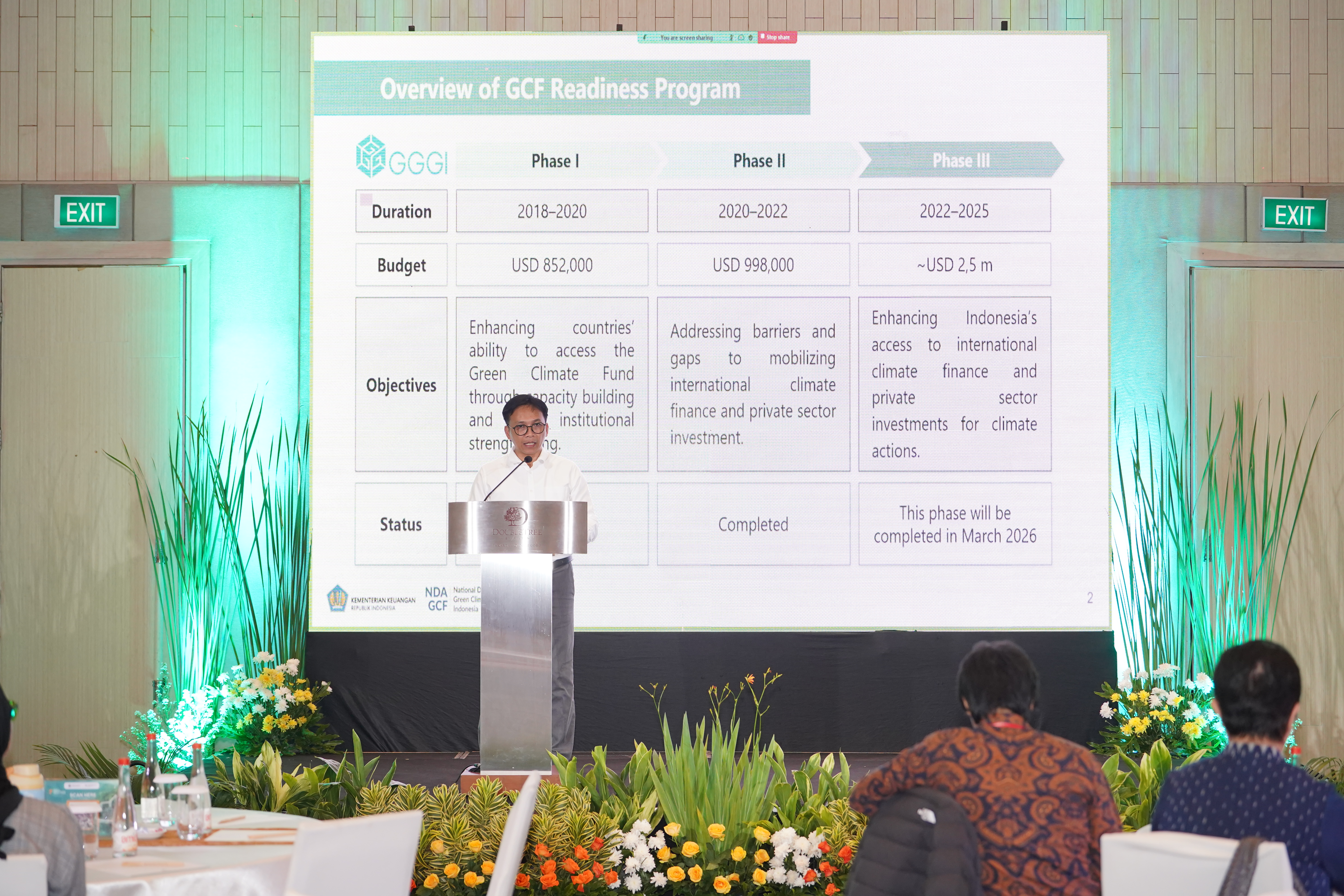
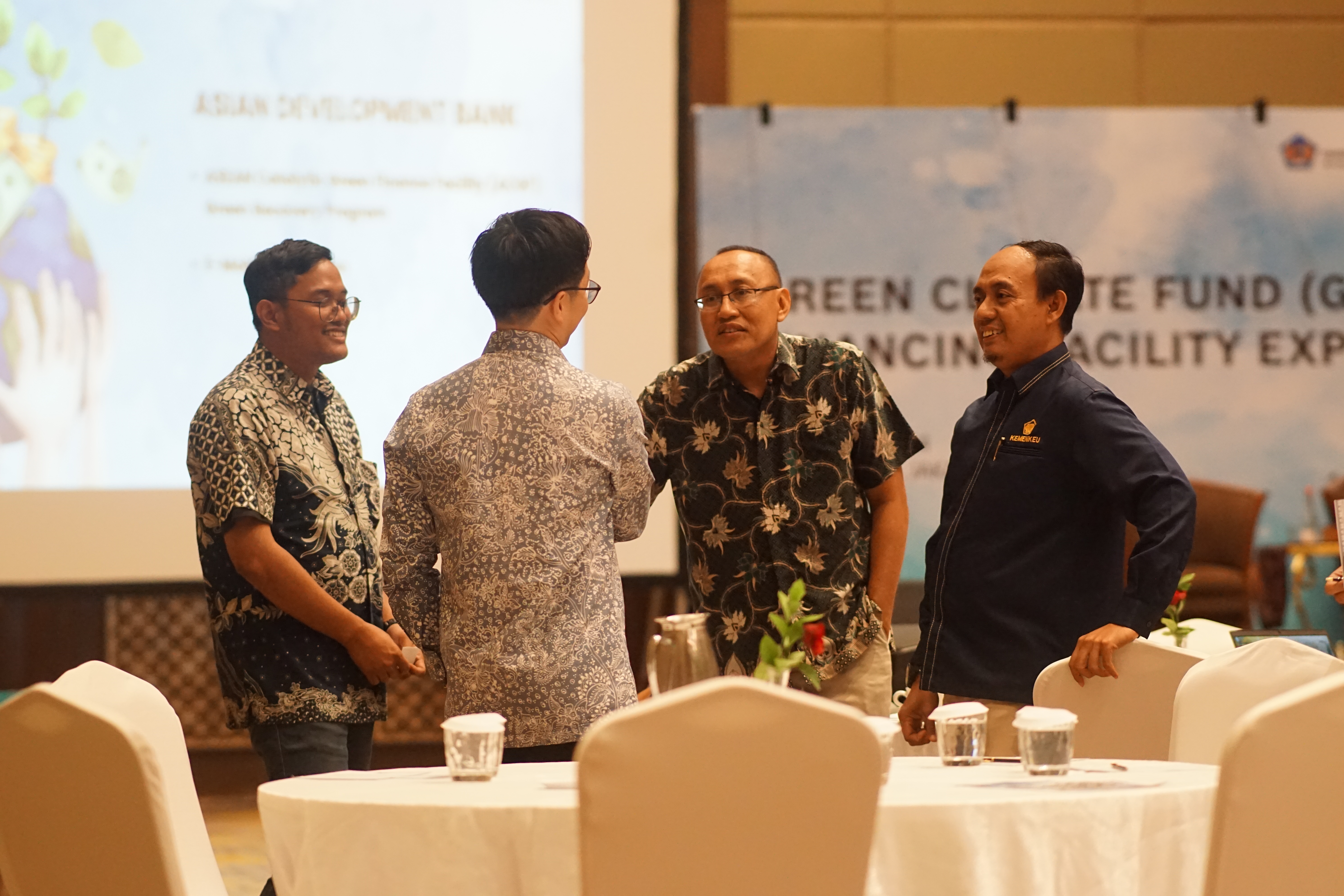
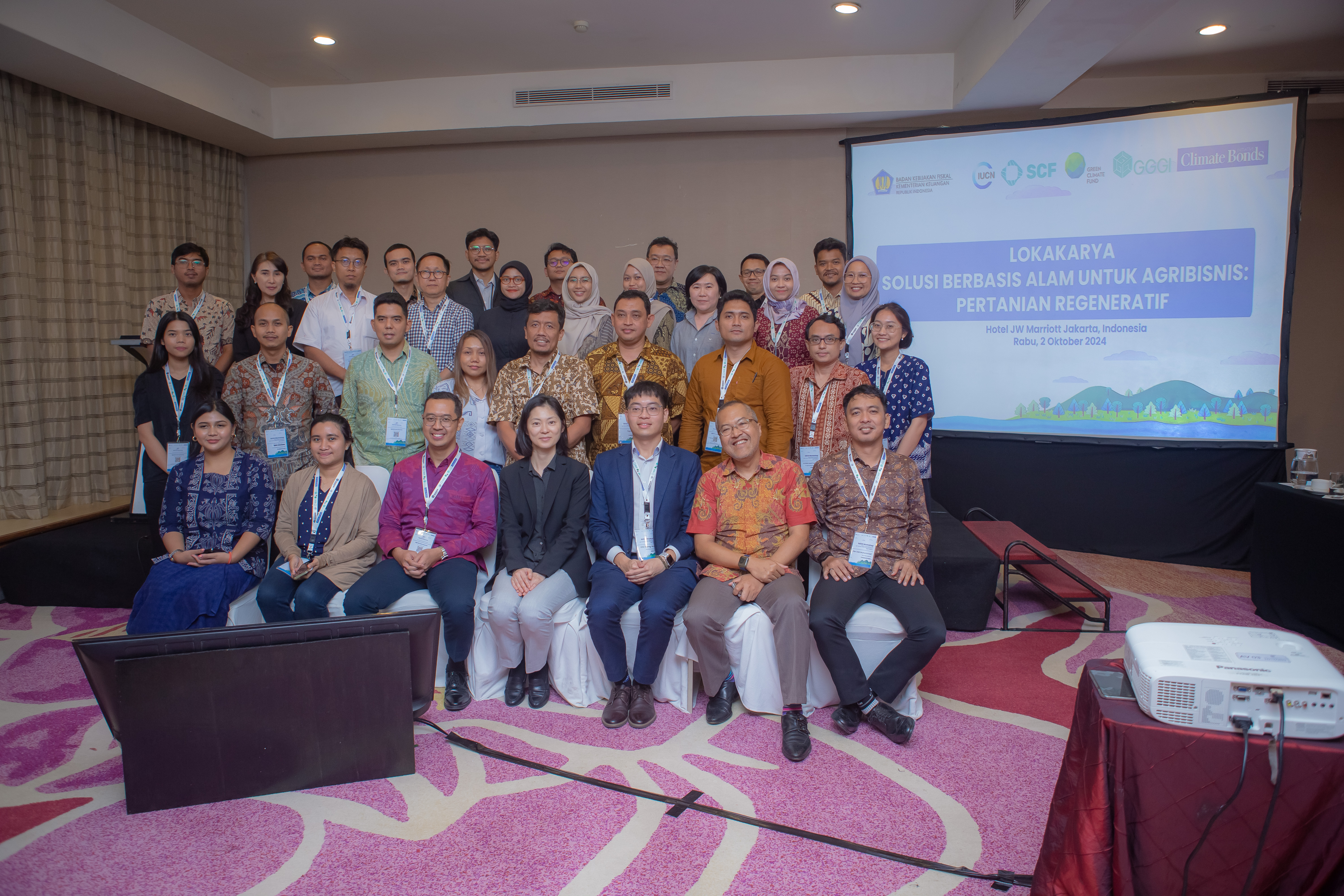
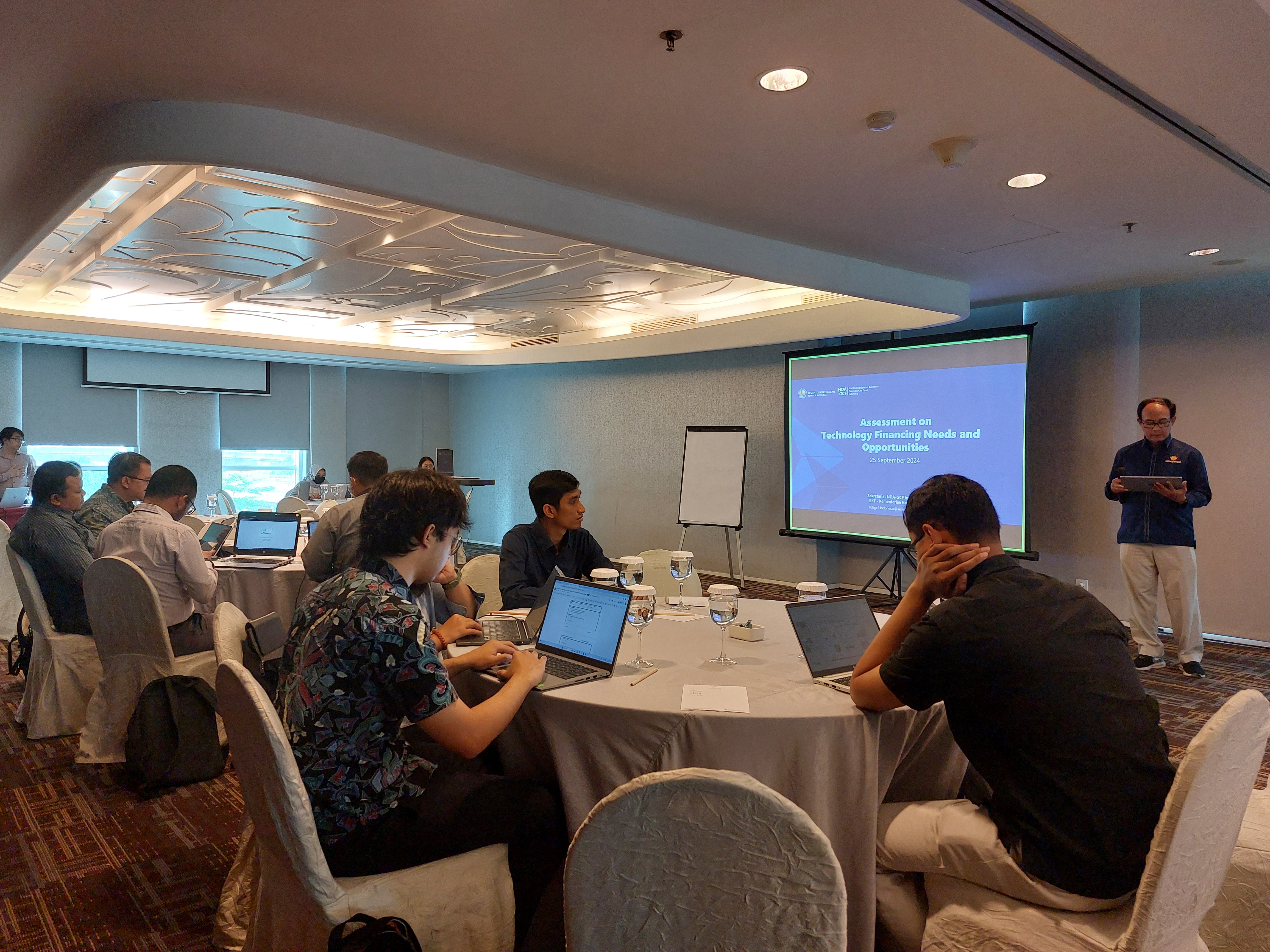
The Fiscal Policy Agency (FPA) as Indonesia’s National Designated Authority for the Green Climate Fund supported by Global Green Growth Institute (GGGI) held a webinar series to encourage the involvement of private sectors in mobilizing climate change finance in mitigation and adaptation sectors. This webinar series was held on Thursday (10/12) and Tuesday (15/10) and is a forum to raise awareness on climate change finance, exchange information on the involvement of private sectors in Indonesia’s climate financing efforts, and sharing best practice and lessons learned from climate change actors.
Mitigation Sector
In the first series called “The Involvement of Private Sectors in Mobilizing Climate Change Finance in Mitigation Sector”, NDA GCF Indonesia working together with Indonesia Business Council for Sustainable Development (IBCSD) invited the Directorate of Climate Change Mitigation, Ministry of Environment and Forestry (MoEF) who explained about the roadmap of Nationally Determined Contribution (NDC) implementation in mitigation sector and the roles of Non-Party Stakeholders (NPS). The business world in Indonesia is encouraged to participate in various sectors such as forestry, energy, waste management, agriculture, and industry. There have been a lot of global initiatives done by NPS and recorded in the Global Climate Action, UNFCCC, such as 21% CO2 emission reduction by Sumitomo Forestry Co across the year 2017 to 2040, and the issuance of green bonds amounting to USD67 million in 2016 by Stangastaden-Sweden.
Climate finance access cannot solely come from the Government. Dudi Rulliadi as the Analyst of Center for Climate Change Finance and Multilateral Policy, Fiscal Policy Agency, explained about the financing opportunity from the Green Climate Fund (GCF) and how the mechanism is. Currently, NFA GCF Indonesia is also inviting all stakeholders in the country to submit a Project Concept Note (PCN) that could potentially receive funding from the GCF.
Various private sector representatives were also invited to deliver presentations on the mitigation projects that they implemented. Started from a circular economy model in agribusiness implemented by Great Giant Foods (GGF), private-public collaboration from the Tropical Forest Alliance, to micro-grids development in Paku and Umbele islands by Electricite de France, who is currently developing a proposal for the GCF.
Adaptation Sector
The second series titled “The Involvement of Private Sectors in Mobilizing Climate Change Finance in Adaptation Sector”, the NDA GCF Indonesia was partnering Mercy Corps Indonesia invited the National Development Agency (Bappenas) and MoEF to inform on the national priority programs in climate change adaptation.
Bappenas through Directorate of Environment conveyed that the adaptation priorities have been stated in the Mid-term National Development Plan 2020-2024, and the currently under development, National Action Plan on Climate Resilience 2021-2030, continuing the National Climate Change Adaptation Plan, which is ending in 2020. The Directorate of Climate Change Adaptation, MoEF explained about the Roadmap of NDC Implementation in Adaptation and Adaptation Financing Needs study. The economic loss on four priority sectors (food, energy, water, and health resilience) can amounted to Rp 110,38 trillion or equals to 0,66% of 2020 GDP.
Although adaptation projects are urgent because of its relation to basic human lives, the involvement of private sectors in adaptation sectors are far less than the mitigation sectors. This is also stated by Dudi Rulliadi, the Analyst of Center for Climate Change Finance and Multilateral Policy, Fiscal Policy Agency based on the study done by the FPA. The constrains are generally caused by a paradigm that consider adaptation projects are solely Government’s responsibility and have small investment values.
To shift this paradigm, in the second session various private sector representatives and other partners is also invited to conveyed lessons learned that there are many opportunities for private sector’s contribution in climate change adaptation. Some lessons learned from public-private collaboration in climate change adaptation was presented by Mercy Corps Indonesia, while a representative of PT Asuransi Central Asia was also explaining about an innovative insurance product championing the concept of Shared Value and Integrated Risk Management. One of the examples is an insurance that guarantee the risk of loss from natural disasters in crops and fisheries.
A representative from Yayasan Konservasi Alam Nusantara (YKAN) explained about the Mangrove Ecosystem Restoration Alliance program which has a sustainable mangrove forest governance and active participation from various private sector members. Kemitraan, who is now one of the GCF’s Direct Access Entities was also explained about their role as a door for stakeholders in Indonesia to access the GCF. In both of the webinars, the NDA GCF Indonesia also announced the opening of the Call for Project Concept Notes, which will be opened until 15th February 2021.
In general, these webinars were attended by more than 200 participants coming from private and state-owned enterprise, business association, ministries/institutions, NGOs, academic institutions, and other development partners. At the end of the sessions, Norbert Maass, Deputy Country Director GGGI Indonesia hope that this event can provide inspiration to all NPS regarding the contributions to Indonesias climate action and encourage all parties, including the private sectors to actively involved in the cause. The role of private sectors is significant given that they have stronger capital and innovation than public sectors. The private sectors are hoped to collaborate with other parties in developing climate change project ideas to be proposed to the GCF. The involvement of private sectors can boost the effort of achieving the NDC, given the limited capacity of the Government.


 EN
EN  ID
ID